
Complete Exterior Data in One Visit: How AI Replaced Manual Calculation

The Challenge
Measuring window openings, estimating surface areas from drawings, and identifying damage by eye — all of it requires access equipment, multiple site visits, and a lot of manual work before a single material order can be placed.
For this Case Study, the client needed a complete picture of the building's exterior before committing to a full facade renovation: exact material quantities, window replacement specifications, roof surface data, and a condition assessment — all at once.
We delivered it in a single site visit.
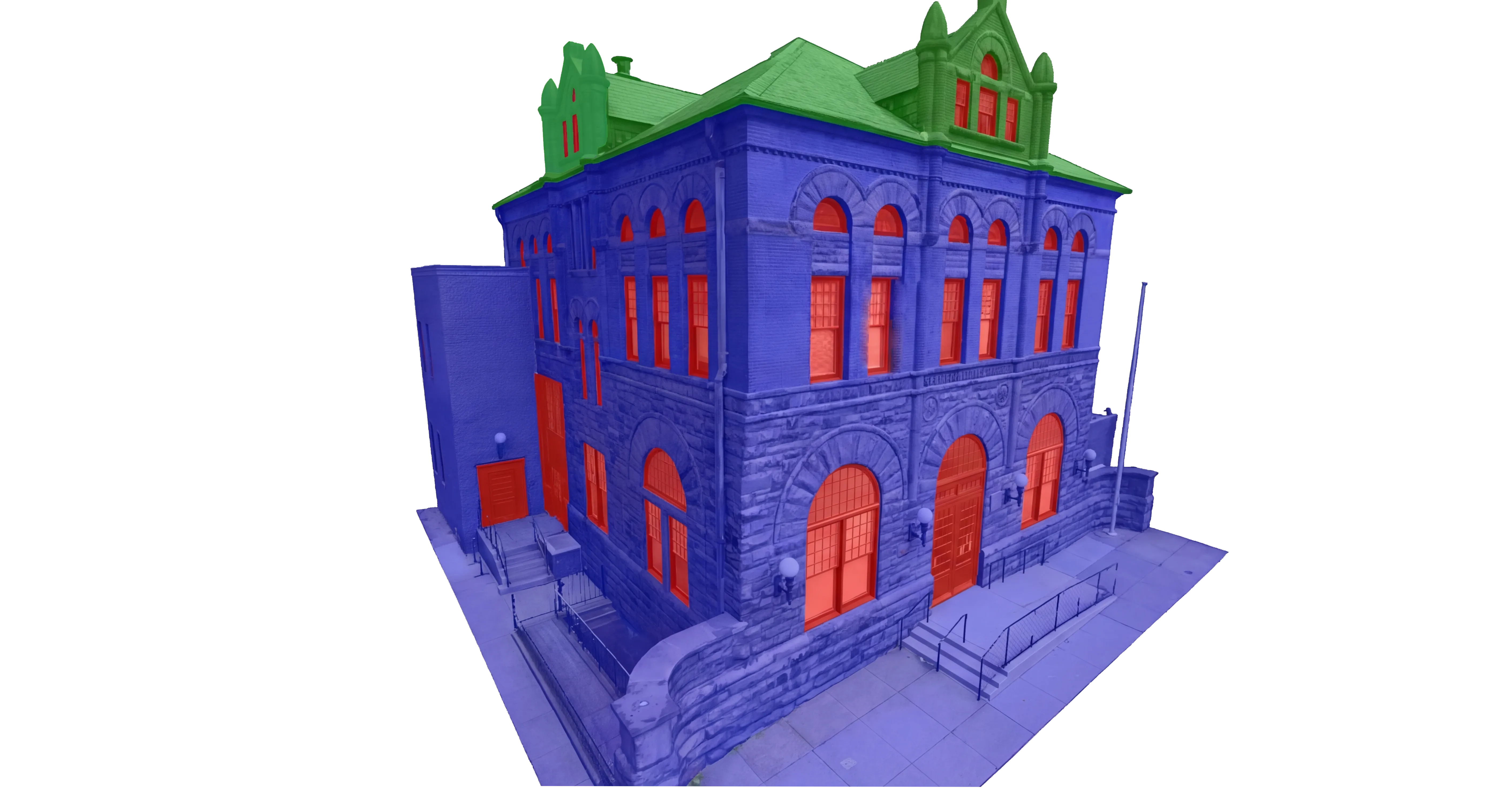
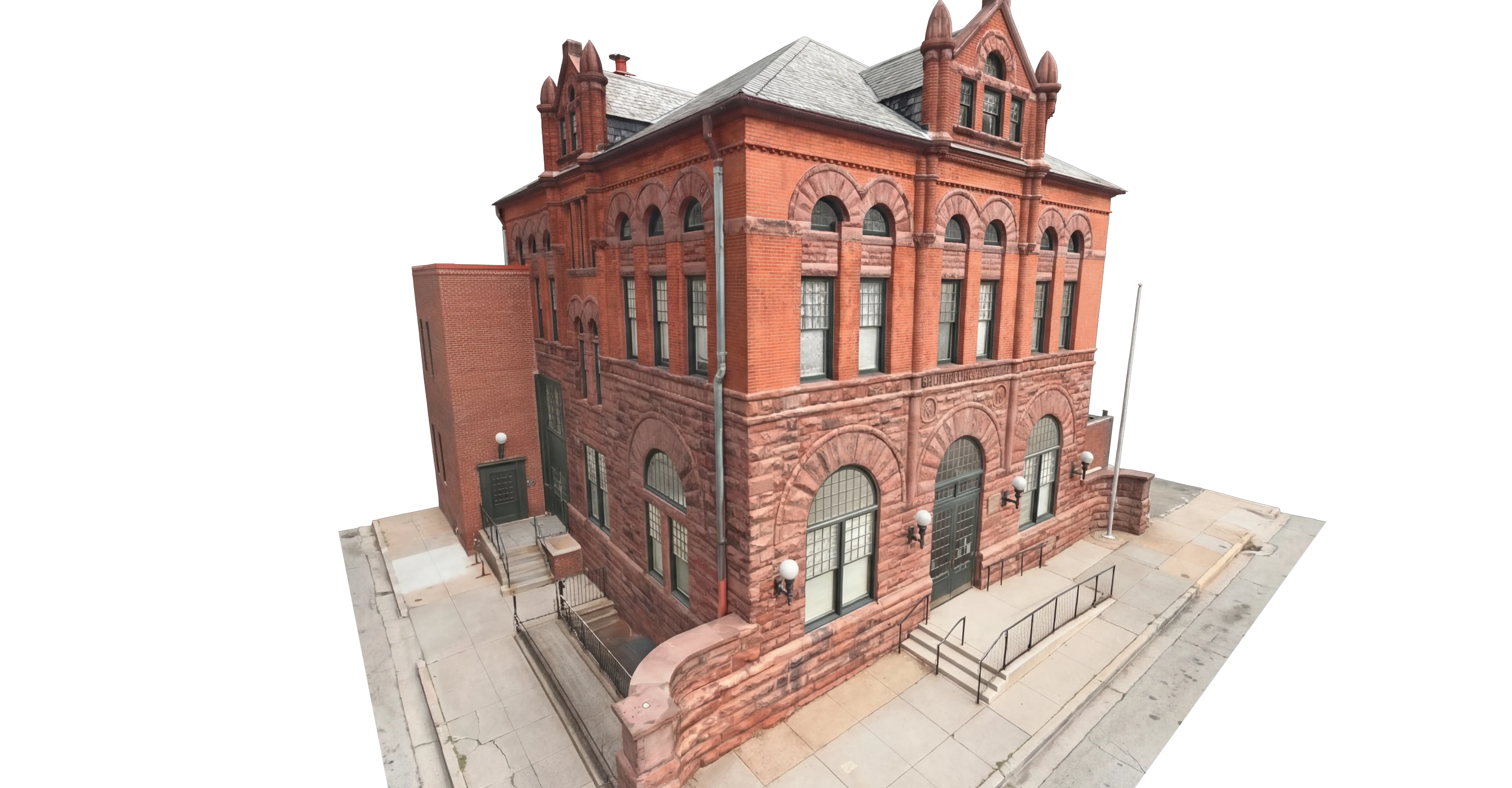
AI Segmentation: Quantities You Can Order From
Using Qubik's segmentation tool, we classified every surface on the 3D model automatically — facade cladding, windows, and roof areas — each assigned to its own layer with precise area calculations.
This meant the client received:
- Facade area in m² broken down by material zone, ready for procurement
- Window openings with exact dimensions and count, per elevation
- Roof surfaces categorised by type and pitch, with individual area readouts
No old drawings, no manual measuring on site and no material spill. The 3D model is the source of truth, and the segmentation extracts the numbers directly from it.
Damage Detection: 100,000+ Training Images Put to Work
Before any repair work begins, you need to know what and where you're repairing. Manual inspection at height is slow, patchy, and dependent on the inspector's eye.
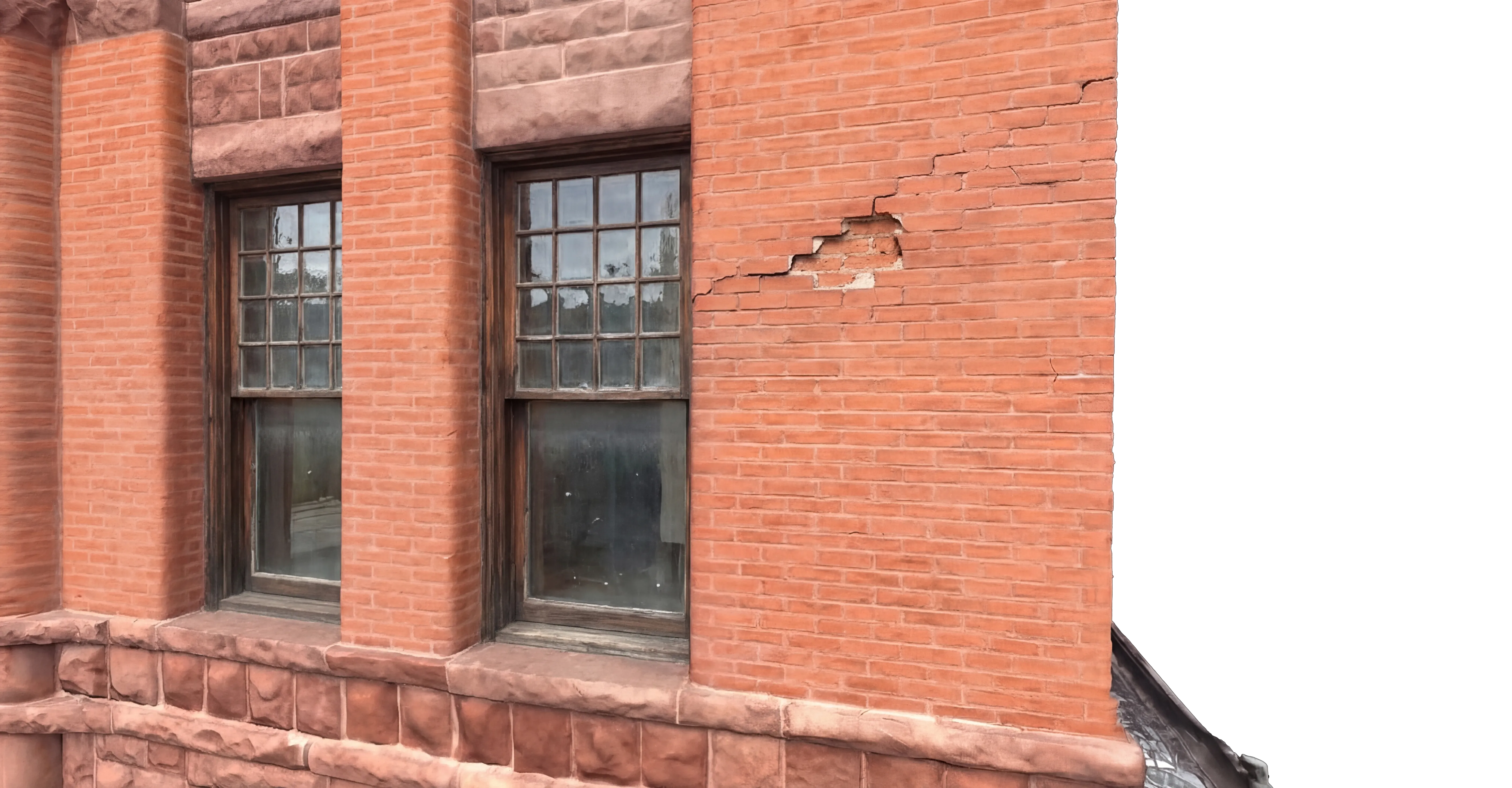
Qubik's damage detection model — trained on over 100,000 images of facade defects — processed every image captured in the 3D survey automatically. Cracks, spalling, staining, and surface deterioration were flagged and pinned to their exact location on the model.
The client received a complete damage map of the building before a single person went up on a ladder.
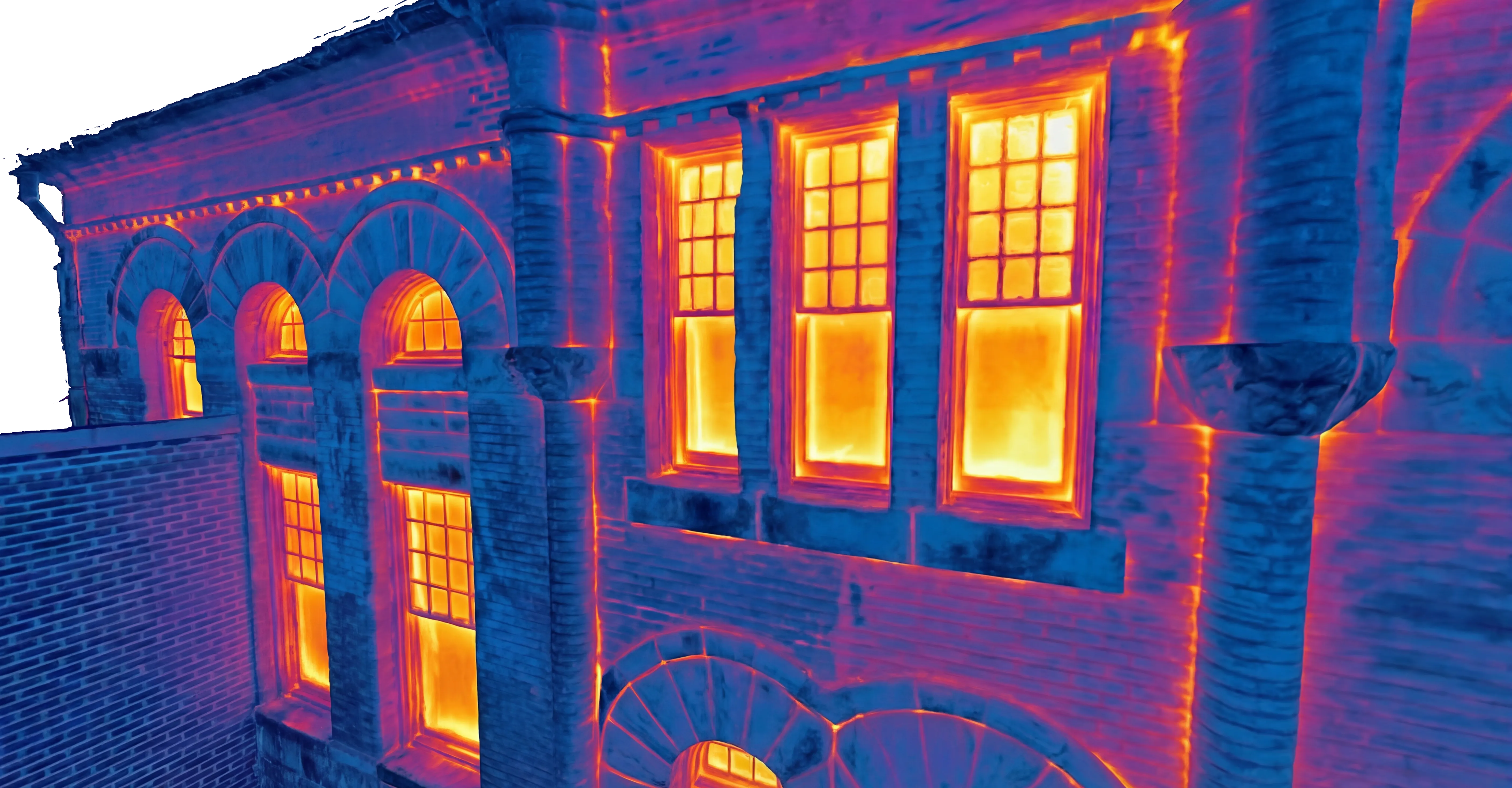
Infrared Analysis: Seeing Inside the Building From the Outside
This is where the project went beyond standard surveying.
By combining drone-captured infrared imagery with AI visual analysis, we were able to identify heat leakage across the facade — and map it directly onto the 3D model. The result was a spatial heat loss map: not just "there's leakage somewhere on the north elevation," but exactly where on the building, visible in three dimensions.
For a facade renovation, this changes the prioritisation entirely. Instead of replacing materials uniformly, the client could target the worst-performing zones first — with the data to back it up in conversations with contractors and insurers.
What This Replaces
A project like this traditionally requires multiple site visits, access equipment for close-up inspection, manual measurements transcribed into spreadsheets, and a separate thermal survey booked through a specialist. Each step introduces delay, cost, and the risk of inconsistent data.
Here, everything came from one survey. The 3D model, the segmentation, the infrared analysis, and the damage detection all reference the same geometry — so the data is consistent, auditable, and ready to hand directly to contractors.
- Exterior Quantity
- AI Segmentation
- AI Damage Detection
- Infrared Analysis