
Surveying + HP SitePrint = How Robotics Arrived on Site


Precision from the Ground Up
Working alongside TRIG for many years, we have seen a shift in how surveying and BIM are treated on site. Implementing HP SitePrint lets us automate the layout process while continuously validating contractor materials — connecting the digital model directly to the physical site.

Coordination as a Prerequisite
For robotic layout to work, the underlying BIM coordination needs to be accurate. Any deviation between the digital models — whether from architects, structural engineers, or MEP — will produce layout errors on site.
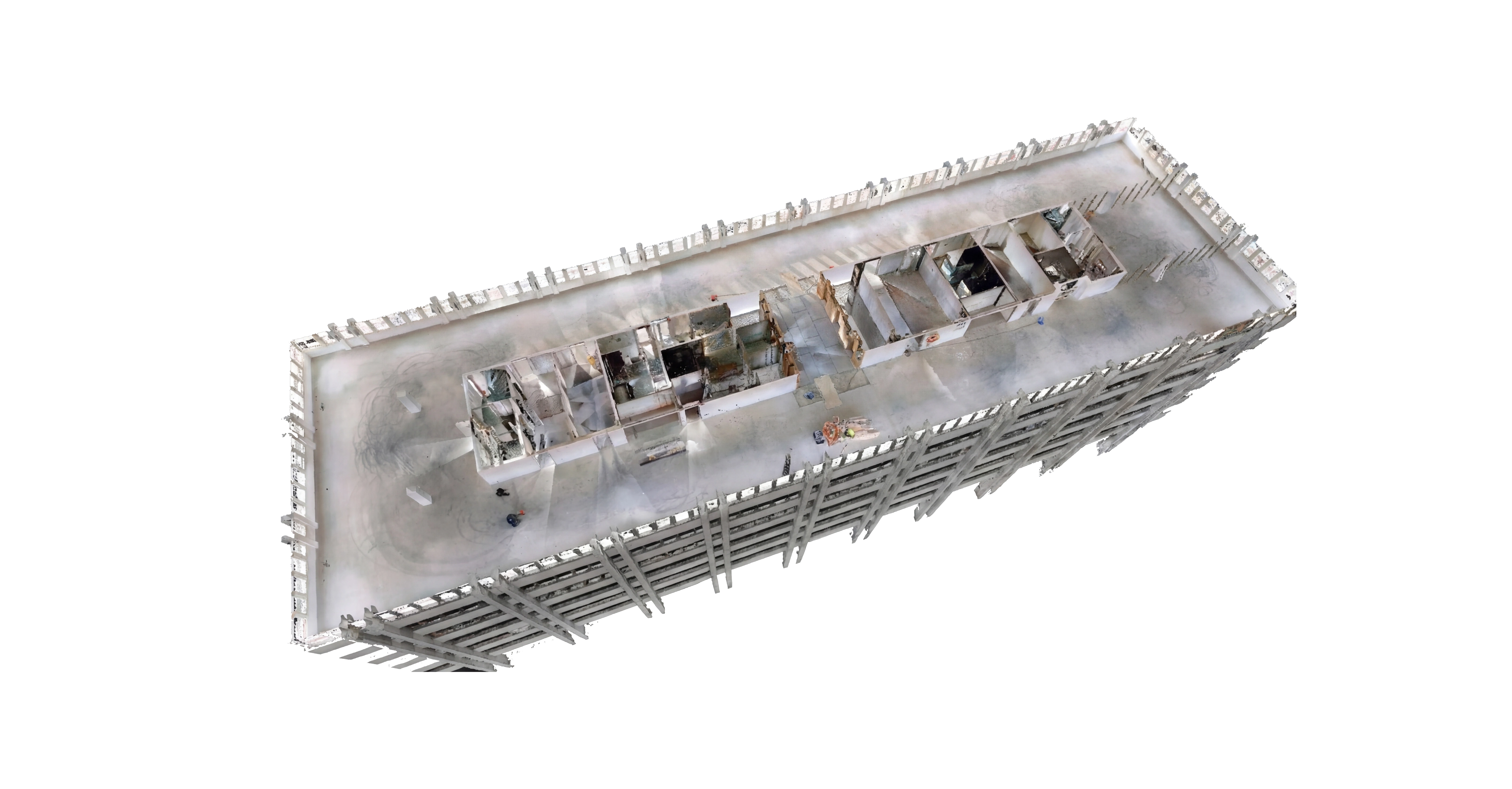
Project teams need to coordinate every discipline's data before the robot touches the floor. Without that, the precision is simply applied to incorrect information. Our work has been to make sure the models reflect what actually needs to be built.
Scaling Surveying Operations
With robotic siteprinting, layouts are printed directly onto the concrete with millimeter precision, replacing the manual work typically done with chalk lines and spray cans. This lets the project team focus on structural decisions while the robot handles the repetitive layout work.
On large projects with tight schedules, this combination of 3D scanning, BIM coordination, and robotic layout reduces the margin for error and makes the survey process easier to scale across TRIG's client base.
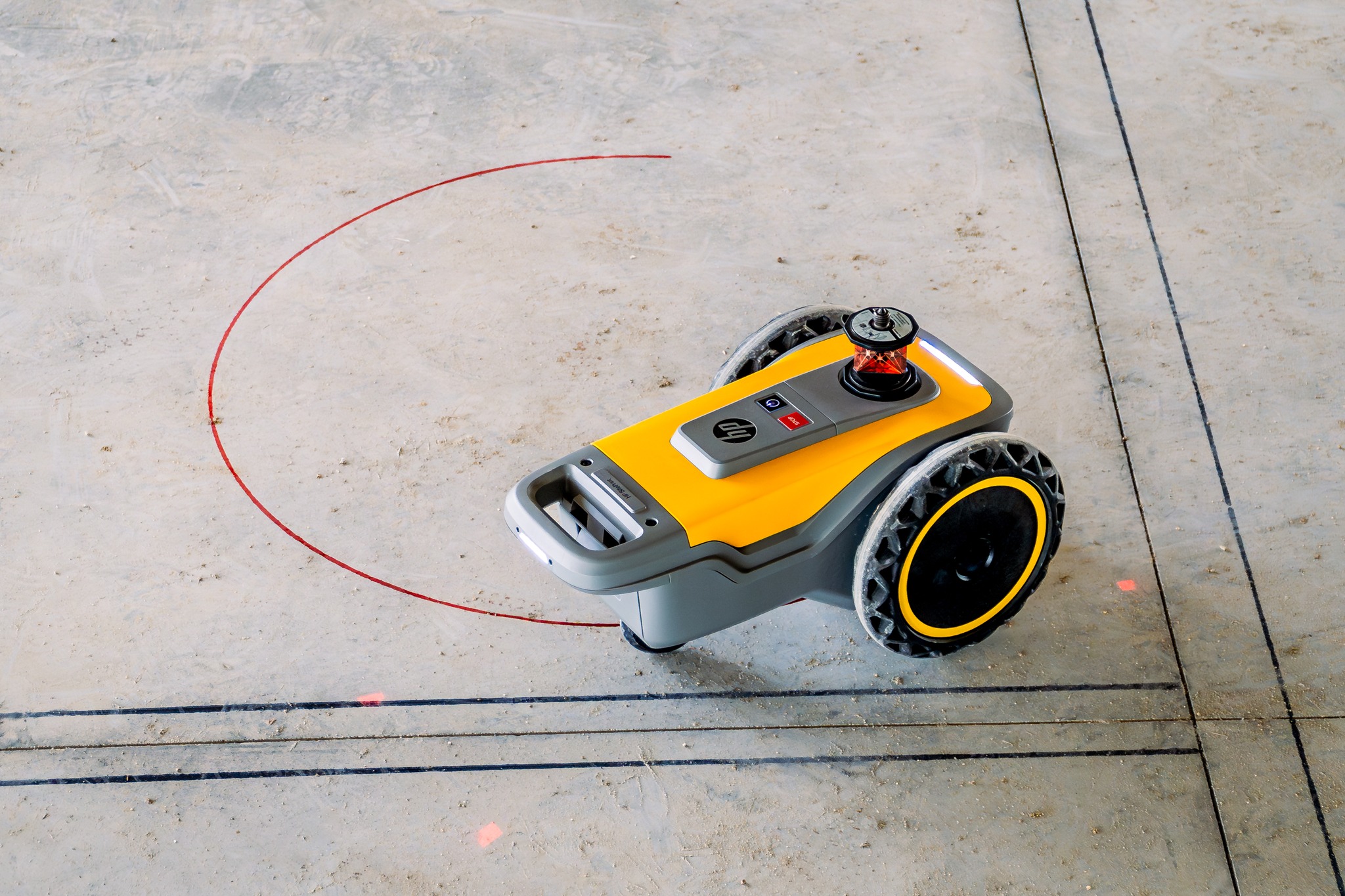
We continue to look at how these tools connect with our scanning and coordination services, with the aim of catching errors in the model before they reach the build.
- Robot Layout
- 3D Surveying
- BIM Coordination
- Production
- Construction