
Automated Solar Planning for Husverket's Catalogue - A Joint Study


The Challenge
For a turnkey home builder like Husverket, design decisions — from roof pitch to chimney placement — are fixed long before construction starts. Calculating accurate energy yields across dozens of house models, orientations, and locations has traditionally been done manually for each project.
We ran a joint study on one of their core projects to see whether solar planning could be moved earlier in the design process and whether it could scale across their catalogue without significant added effort.
Testing Scalability on 3D Models
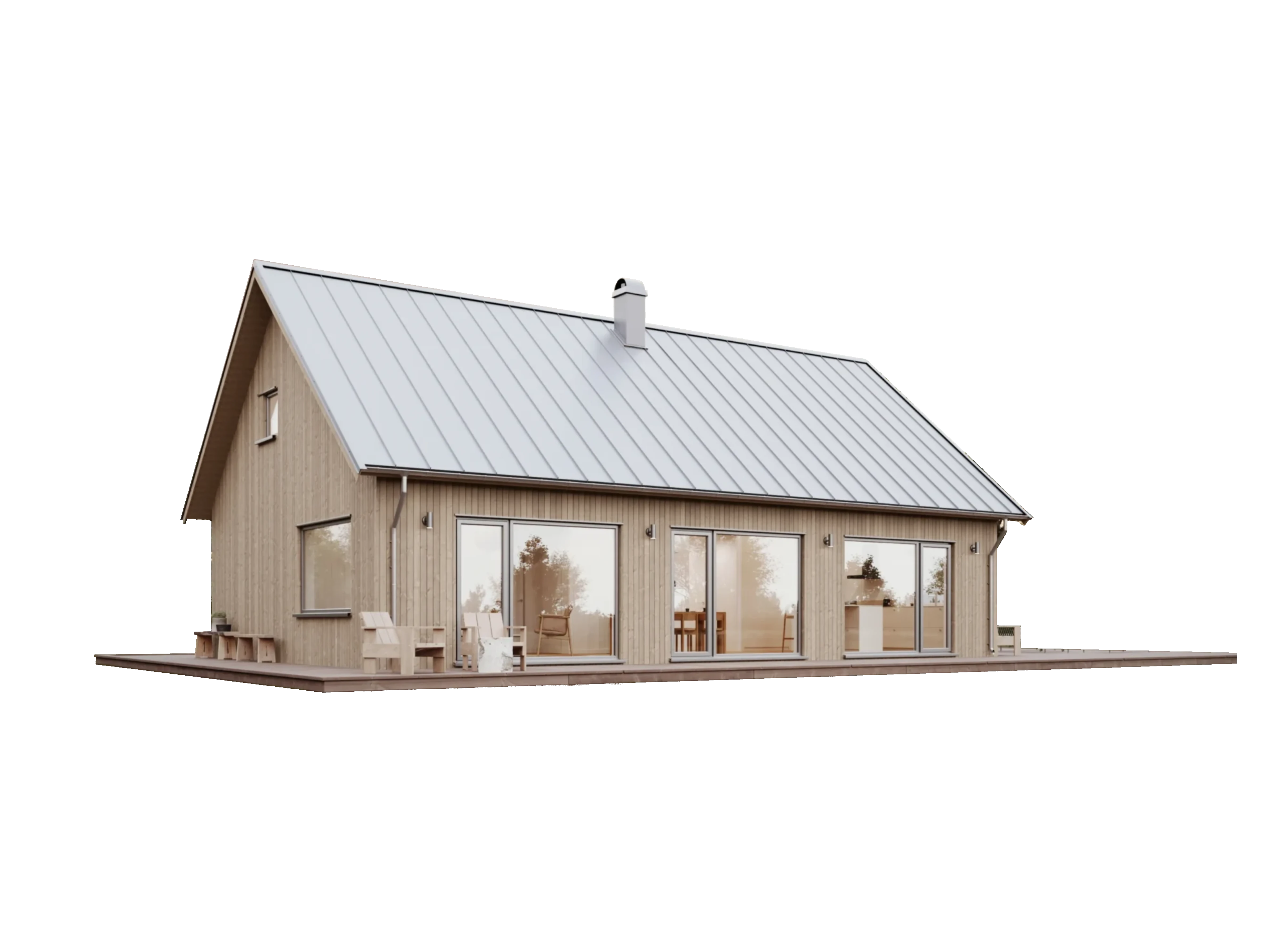
The study involved taking Husverket's existing 3D roof geometries and running them through Qubik's automated solar tool. The aim was to generate shadow and yield data for any house in their catalogue in far less time than the manual process requires.
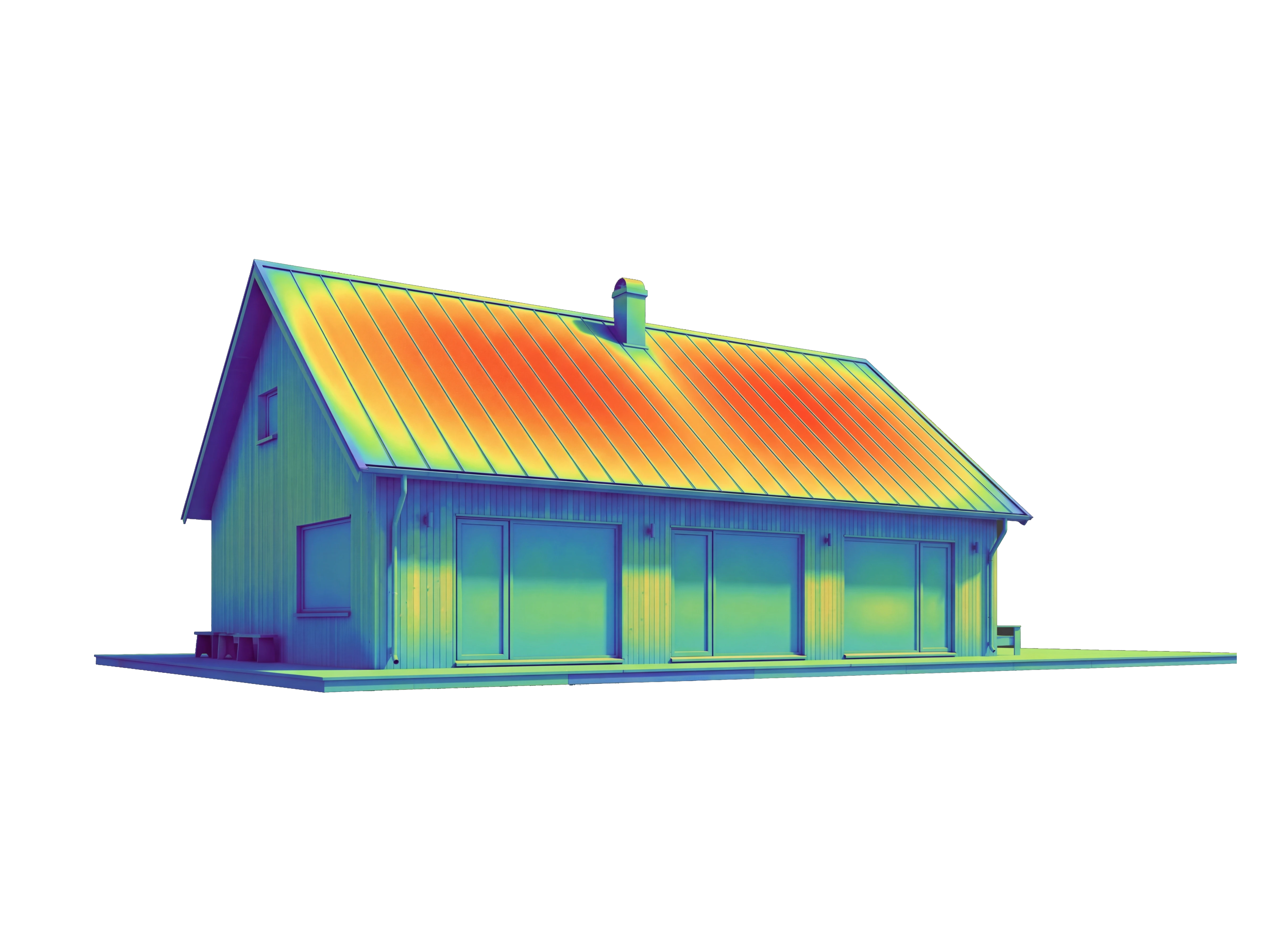
The tool accounts for shadow loss from both the building's own geometry and the surrounding environment. In the study, we tested how dormers, chimneys, and nearby obstacles affected the output across different roof configurations.
Each house model already carries a geographic location — latitude and longitude — so combined with five years of irradiance data (43,800 hours), the tool can predict solar placement and energy yield without any manual input per site.
The automatic placement algorithm fills complex roof polygons with the maximum number of panels, meaning Husverket can generate optimized layouts for every customer without requiring a solar specialist on each sale.
The study produced:
- Automated annual energy output (kWh) for any model in the catalogue
- Instant maximized panel layouts using a rectangle-in-polygon algorithm
- Dynamic shading analysis that updates based on building orientation
- Visual irradiance heatmaps for explaining roof performance
3D Renderings for Client Communication
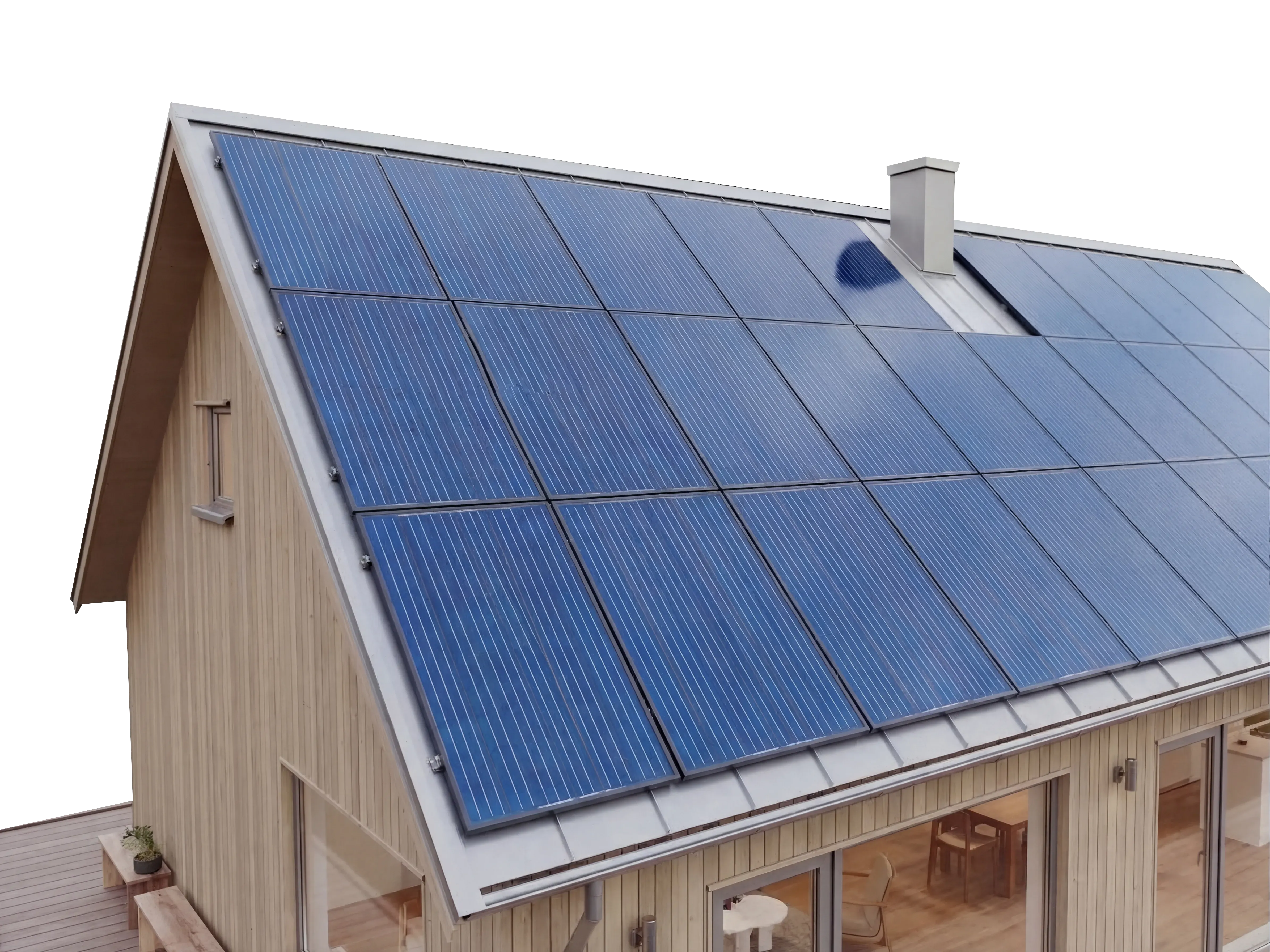
The study also looked at how to better communicate the design to the end client. By generating 3D renderings of the proposed solar layouts, Husverket can show customers what the panels will look like on their specific home.
Whether a customer prefers a symmetrical layout or wants to understand how panels interact with dormers, the renderings make the technical choices easier to discuss.
PVGIS Integration
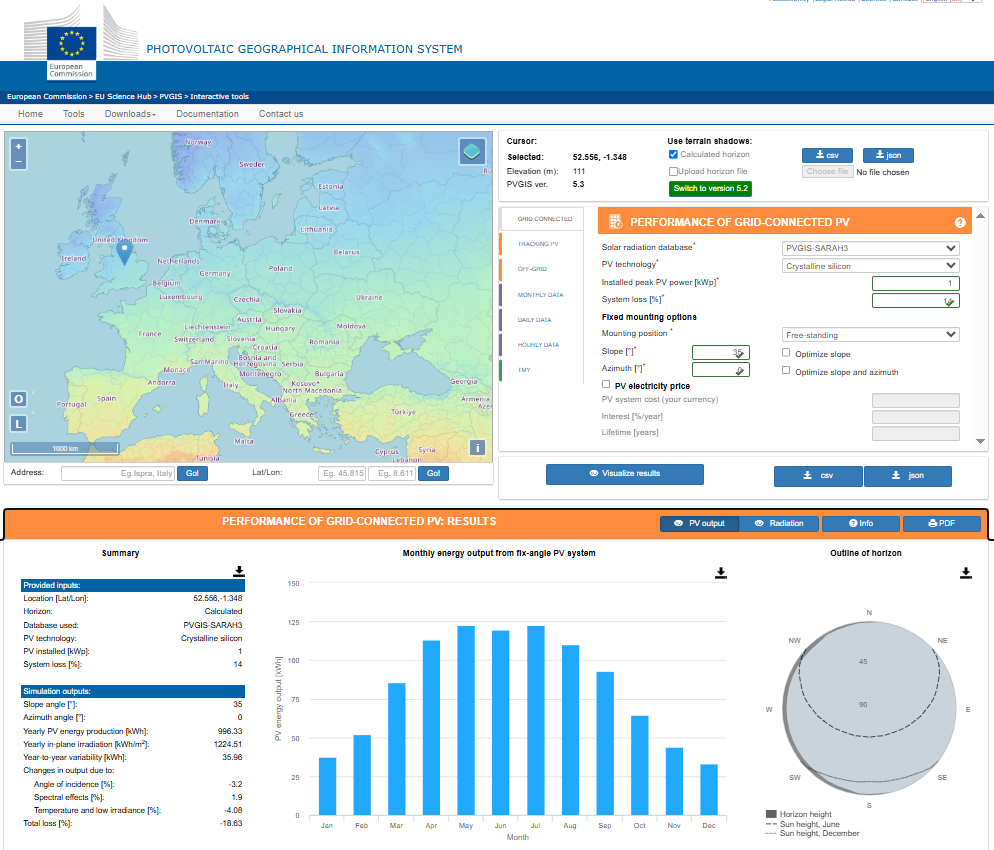
To validate the results, we integrated PVGIS data — the European Commission's solar radiation database — to generate location-specific production estimates for any site in Sweden.
This means Husverket can produce energy forecasts for a house in Skåne on the same basis as one in Norrland, within the same workflow.
Study Findings
The study showed that automated solar planning can scale across a product catalogue. By modelling a roof once, Husverket can generate accurate solar data for every variation of that model.
Instead of one-off reports, the process can provide:
- Standardized solar summaries as part of every customer handover
- Roof designs optimized for energy production from the start
- Faster energy estimates during the sales process
Why Scalability Matters
The window to optimize a roof design is early. Running high-accuracy solar analysis at the design stage means builders like Husverket can include solar data as a standard output without adding complexity to each project.
- Solar Analysis
- Shadow Calculation
- Automatic Placement
- PVGIS